Key Facts
Dr Pinelopi Dragoumi
General information
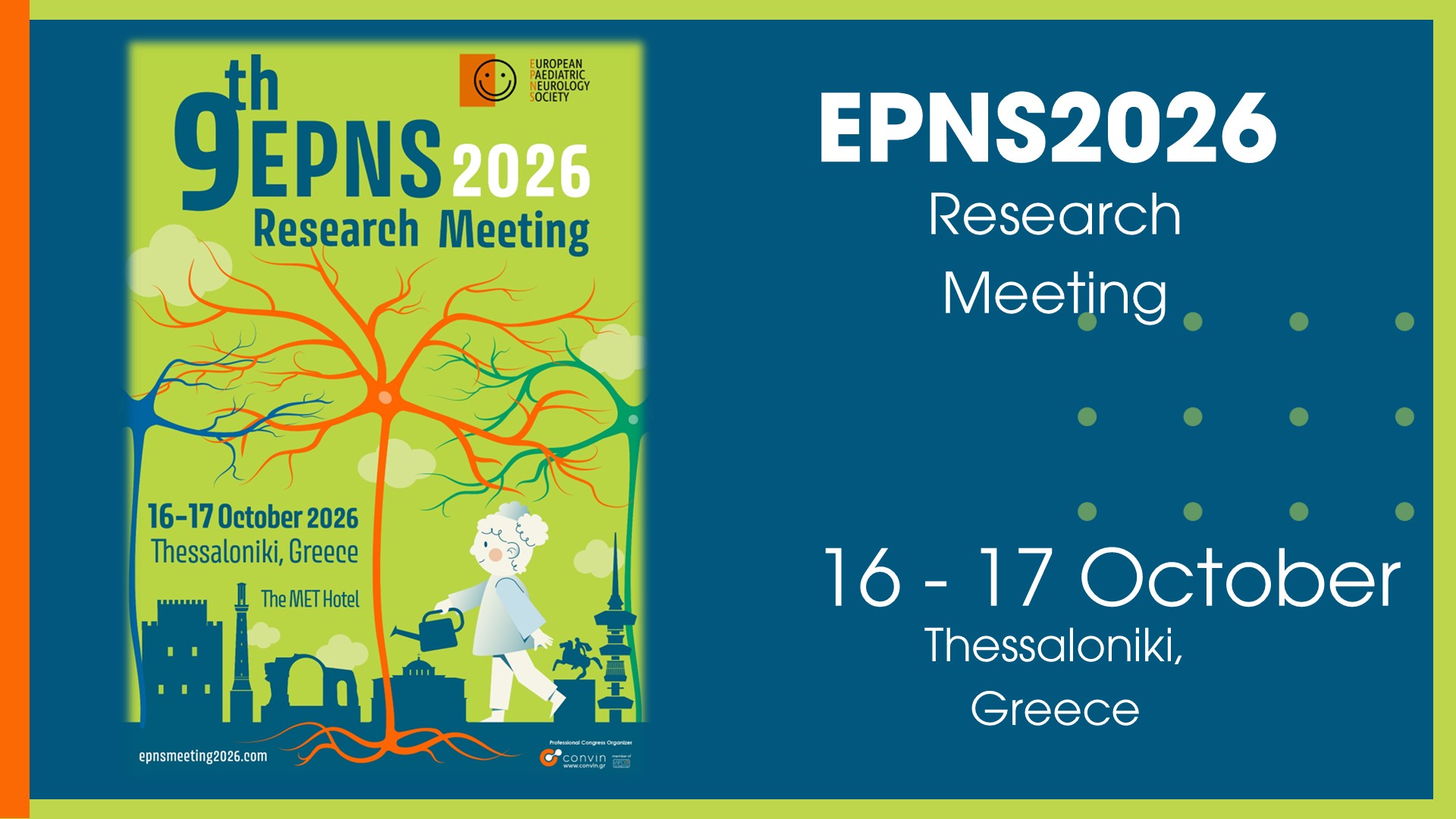
The EPNS has been organising Research Meetings since 2008. With an aim to enhance research in Paediatric Neurology, the meeting brings together leaders in the field, active researchers and young fellows who are interested to join or to set up research projects. It is a forum for researchers in Paediatric Neurology, where they present their work, ideas, results, creating the possibility for good interaction between researchers and premises for networking, future collaborative research in Europe and beyond. Experienced professionals and young researchers get together, in an environment where interactive, vivid discussions can take place around the presented topics.
Who is the EPNS Research Meeting aimed at?
The EPNS looks forward to welcoming Child Neurologist researchers at all stages of their career: leaders/senior colleagues, junior scientists and PhD students are all welcome and encouraged to attend.
IMPORTANT: all participants must be EPNS members who have paid their 2026 EPNS membership fee to attend this Research Meeting. If you are not a member, please email info@epns.info for more information. Note: EPNS has several different membership categories, such as for Trainees, Neuroscientist, PhD students, etc. with substantially reduced membership fees (e.g. 20 Euros for 2026). Visit for more information: https://www.epns.info/epns-membership-categories/
CLICK HERE OR SCROLL DOWN TO SEE DETAILED WORKING GROUP INVITATIONS
There will be 2 break-out bands, each with 5 Working Group sessions running parallel. There are 8 Working Groups. Due to the number of abstracts accepted, two of the Working Groups will run in both bands (Epilepsy and Developmental Neurology & Neurogenetics – each session will have different abstract programmes).
Programme at a Glance
- Registration, lunch & welcome
- Plenary: Antisense oligonucleotide therapies in neurological disorders – Prof Rebecca Schüle
- Band A Working Groups (5 parallel)
- Band B Working Groups (5 parallel)
- Get together & dinner
- Plenary: Autoimmune encephalitis – Dr Thais Armangue
- Plenary: EU Grant applications – Prof Nadia Bahi-Buisson
- EBC: Rare Brain Diseases Hub – Prof Sameer Zuberi
- Awards – 2 Research Prizes, 8 Best Presentation winners
- Farewell lunch
CLICK HERE TO VIEW THE FULL MINUTE-BY MINUTE PROGRAMME AND WORKING GROUP ASSIGNMENTS
EPNS Research Prizes
Two prizes of 2,500 Euros per person and certificate awarded to young neurologists who present outstanding, innovative ideas in research in Paediatric Neurology. Eight Best Presentation winners will be presented a certificate.
To be eligible to receive an award, the participant MUST be available to present on DAY 2.
Venue
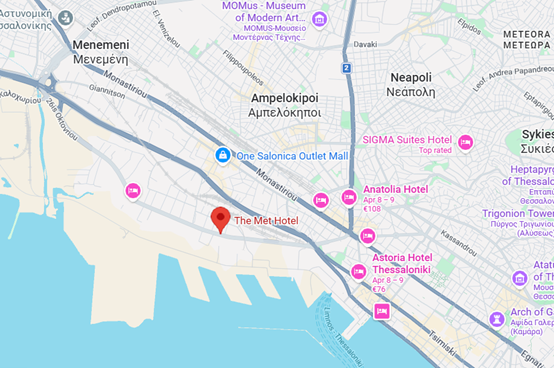
The Met Hotel Thessaloniki, 48, 26th October Street, 546 27 Thessaloniki, Greece. The venue is a modern 5-star hotel, conveniently located near the city center and the port area, offering high-quality conference facilities and easy access to key attractions.
https://maps.app.goo.gl/LX7WD36juv7vK8Kk8
Accommodation
Participants have the option to book accommodation either as part of a combined registration package or independently, depending on their preferences. Through the online registration form, participants may select a Registration Package with Accommodation, which offers a convenient and cost-effective solution, or proceed with Registration Only and arrange their own stay as they wish. For extended stays or alternative dates, participants are kindly requested to contact the organizers directly. Accommodation is not included in the cost of registration stated on this page.
↓ Welcome to Thessaloniki!
Thessaloniki is a vibrant metropolitan city located in the northeast corner of the Aegean Sea, with a population of approximately 1 million. It is the economic and cultural hub of Northern Greece, hosting numerous companies, universities and institutions. Strategically positioned at the crossroads of East and West, Thessaloniki serves as a gateway to South-eastern Europe, the Balkans and the Middle East. The city is easily accessible and only 14 km from Thessaloniki International Airport “Makedonia”, which offers year-round connections to numerous domestic and international destinations. Compact and walkable, Thessaloniki invites visitors to explore its historic centre, vibrant neighbourhoods and scenic waterfront.
↓ Travel to Thessaloniki
All attendees organise their own travel. Thessaloniki is easily accessible by air, rail, and road, making it a convenient destination for international and domestic travellers.
By Air: The city is served by Thessaloniki International Airport “Makedonia”, located approximately 15 km from the city centre. The airport offers numerous direct and connecting flights across Europe.
Transportation from/to the Airport
- Taxi: Available 24/7 outside the arrivals terminal. The journey to the city centre takes approximately 25–30 minutes.
- Public Bus: Bus line 01X (day) and 01N (night) connect the airport to the city centre with frequent departures. Travel time is approximately 40–50 minutes.
By Train / Bus: Thessaloniki is well connected to major Greek cities via rail and intercity bus services.
↓ EACCME® Accreditation
The EPNS Research Meeting 2026, Thessaloniki, Greece 16/10/2026 – 17/10/2026, has been accredited by the European Accreditation Council for Continuing Medical Education (EACCME®) with 9.0 European CME credits (ECMEC®s). Each medical specialist should claim only those hours of credit that he/she actually spent in the educational activity.
Through an agreement between the Union Européenne des Médecins Spécialistes and the American Medical Association, physicians may convert EACCME® credits to an equivalent number of AMA PRA Category 1 CreditsTM. Information on the process to convert EACCME® credit to AMA credit can be found at https://edhub.ama-assn.org/pages/applications
Live educational activities, occurring outside of Canada, recognised by the UEMS-EACCME® for ECMEC®s are deemed to be Accredited Group Learning Activities (Section 1) as defined by the Maintenance of Certification Program of the Royal College of Physicians and Surgeons of Canada.
Terms & Conditions: Participants are kindly requested to review the Terms and Conditions prior to completing their booking (link)
↓ Useful Information
Language: English is the official language of the EPNS Research Meeting 2026. No simultaneous interpretation will be provided.
Time: Thessaloniki operates on UTC/GMT +3 during the summer period.
Emergency Telephone Numbers:
European Emergency Number: 112
Ambulance: 166
Fire Department: 199
Police: 100
General Telephone Information: 11888
Banking & Currency Exchange: The official currency of Greece is the Euro (€). Banks are typically open Monday to Friday from 08:00 to 14:00.
Tipping: Tipping in restaurants, hotels, taxis and other services is optional and depends on the level of service. As a general guideline, approximately 5% of the bill is appreciated.
Climate: In October, Thessaloniki typically experiences mild autumn weather, with average temperatures ranging between approximately 15°C and 24°C.
↓ Liability and Insurance
Registration fees do not include participants’ insurance against personal accidents, sickness and cancellations by any party, theft, loss or damage to personal possessions. Participants are requested to make their own arrangements with respect to health and travel insurance.
DETAILED WORKING GROUP INVITATIONS
Email info@epns.info to contact the Working Group Chairs directly
↓ Autoimmune & Infectious Disease (BAND B) — Kevin Rostasy and Martin Haeusler
Autoimmune and Infectious Diseases Working group welcomes contributions addressing all aspects of inflammatory CNS diseases, including autoimmune disorders, infectious diseases and further inflammatory processes affecting the nervous system. Primary goal of the group is to present own research projects. This may include presentations on finished and on newly planned projects. Proposals with calls for collaboration are particularly encouraged.
↓ Developmental Neurology & Neurogenetics (both BAND A & BAND B) — Göknur Haliloğlu, Ilona Kopyta and Finbar O’Callaghan
The Developmental Neurology & Neurogenetics Working Group is excited to accept research projects on diagnosis, pathomechanisms, management and treatment strategies of neurodevelelopmental disorders, which as an extremely heterogenous group known to affect >3% of children worldwide. Beyond traditional algorithms, from genetics to functional pathways, our aim is to discuss ‘diagnostic toolbox’ in the era of advanced genomics and biology, yield and limitations of genetic tools in combination with evolving methods used for functional validation such as RNA sequencing, omics studies and multiplex assays of variant effect. EPNS research meeting will provide an excellent platform for interactive discussion with learning points and collaboration. We would like to encourage young researchers to submit abstracts within a wide range of intellectual disabilities (ID), treatable ID and autistic spectrum disorders, approach in solved and unsolved cases, and possible research projects, through which we will have a better understanding of shared pathomechanisms and comorbodities which will hopefully pave the way to discuss screening, early diagnosis, interventions, counselling and individualized treatment strategies. Anyone interested is welcome to join the discussion!
↓ Epilepsy (both BAND A & BAND B) — Alexis Arzimanoglou, Lieven Lagae and Floor Jansen
Epilepsy working group is a very active formation of epilepsy researchers throughout Europe, many working in accredited centres of the European Reference Network for Rare and Complex Epilepsies, ERN EpiCARE (https://epi-care.eu) with collaborations overseas. We have collaborated in many successful projects and studies over time. During the EPNS Research Meeting we aim to discuss new research proposals, interesting recent and innovative studies and ongoing (multicentre) projects. We would particularly like to give the floor to young researchers in the field to present their research ideas or results during short presentations as well as welcome calls for collaboration with other paediatric epilepsy centres. We are also very interested to discuss identified unmet needs in paediatric epilepsy research. We ask young researchers to submit their abstracts. Even if you do not plan to present your work, we would like to encourage you as much to attend our working group meeting and participate in lively brainstorming discussions. We look forward to receiving your contributions and to meeting you during the EPNS Research Meeting.
↓ Fetal & Neonatal Neurology (BAND A) — Nadia Bahi-Buisson, Regina Trollmann and Lucia Gerstl
The scientific programme and discussion will cover newest research data on models of perinatal brain injury such as hypoxia and ischemia, and excitotoxic injury, as well as their effects and their contribution to clarify the pathophysiology of acquired neonatal brain injury. We will also include groups interested in brain development, including fetal neurologists and specialists of cortical malformations from basic scientist, neuro(foeto)pathologists, fetal radiologist to paediatric neurologist. You are welcome to bring your own ideas, to inform about your own model, to get help in choosing an appropriate model for your own research questions. We would like to develop collaborative work within this group, from basic scientists to clinics. Information on neuroprotective strategies will be shared and possible joint research on fetal and perinatal brain injury will be discussed. We are looking forward to the presentation of your own ongoing research in this area. We will give you slots for presentation and discussion! Please submit your contribution via the abstract submission process. If you do not plan to present your work, we would like to encourage you to attend our working group to participate in lively discussions of ongoing projects
↓ Leukodystrophies (BAND B) — Nicole Wolf and Francesco Nicita
We are delighted that leukodystrophies are now also represented in a dedicated EPNS research working group and look very much forward to participating in the next research meeting. Available advanced treatments as gene therapy for metachromatic leukodystrophy, but also ongoing clinical trials are changing our field. At the same time, symptomatic treatment remains essential. The leukodystrophy research group aims to bring together clinical and basic scientists to advance our knowledge about disease mechanisms, natural history and possible treatment approaches. We invite you to present your project on all aspects of leukodystrophies – planned, ongoing or completed. There will be time to discuss your findings and also to set up possible collaborative projects. Please submit your contribution via the abstract submission process. We particularly encourage young scientists to participate, also if you do not submit an abstract!
↓ Movement Disorders (BAND A) — Michel Willemsen and Andrea Nemeth
We are delighted to announce that the Movement Disorders Working Group has now merged with the Ataxia Working Group to provide broad representation of these fascinating conditions where there remains much to learn and study. The purpose of our group is to allow clinical science researchers to discuss their work, which can span any aspect from the bench to the bedside, in an interactive, positive, and stimulating environment. We invite you to present your work on any aspect of movement disorders or ataxias in children and young people. We would particularly like to encourage early career clinicians, including allied health professionals, who would like to develop a research interest in this field or have established projects that they would like to present. We aim to share ideas and support collaborations with European and other centres as well support Academic visits to host sites. Please submit your contribution via the abstract submission process.
↓ Neurometabolics (BAND A) — Barbara Plecko and Dimitrios Zafeiriou
The Neurometabolic Working Group is happy to accept research projects on diagnosis, pathomechanisms, care and treatment of paediatric neurometabolic disorders. The provided platform offers a great opportunity to establish and strengthen European research networks in the field of neurometabolic disorders in child neurology. We explicitly encourage young researchers to present projects at various stages of realisation – from application or recruitment to preliminary conclusions or final results. See you in our EPNS Research Meeting : )
↓ Neuromuscular (BAND B) — Thomas Sejersen and Guenther Bernert
The Neuromuscular Working Group aims to discuss the latest research developments relevant for the diagnosis, care and treatment of paediatric neuromuscular diseases. The discussion will focus on the application of new approaches for clinical trials, implementation of novel therapies, and the European reference network for neuromuscular diseases (EURO-NMD). Further, new developments and pitfalls in genetic diagnosis, impact of standards of Care, and transition to adulthood care will be discussed. The working group session also will offer an opportunity for scientists and clinicians to present and discuss own research ideas and results.
Acknowledgement of Sponsors
Sponsors have had no control or input into the educational content of this meeting
Bronze Sponsor
Gold Sponsor
Platinum Sponsor
