The concept of the EPNS Visiting Teacher initiative: A volunteer professor / senior/ distinguished member of the EPNS, from Europe who is a recognised expert in a certain field, visits a nominated host centre in a country in Europe which is classified by the World Bank per capita income group 1, 2 or 3, or EPNS category WB4B (email info@epns.info for clarification) for a short stay of intense teaching. Travel and stay will be supported by EPNS. It may be considered that these visits will take place annually thereafter, if the first visit proves to be a success.
EPNS is proud to support the following in 2026:
EPNS Visiting Teacher Kevin Rostasy visited Ukraine 26-28 April 2026
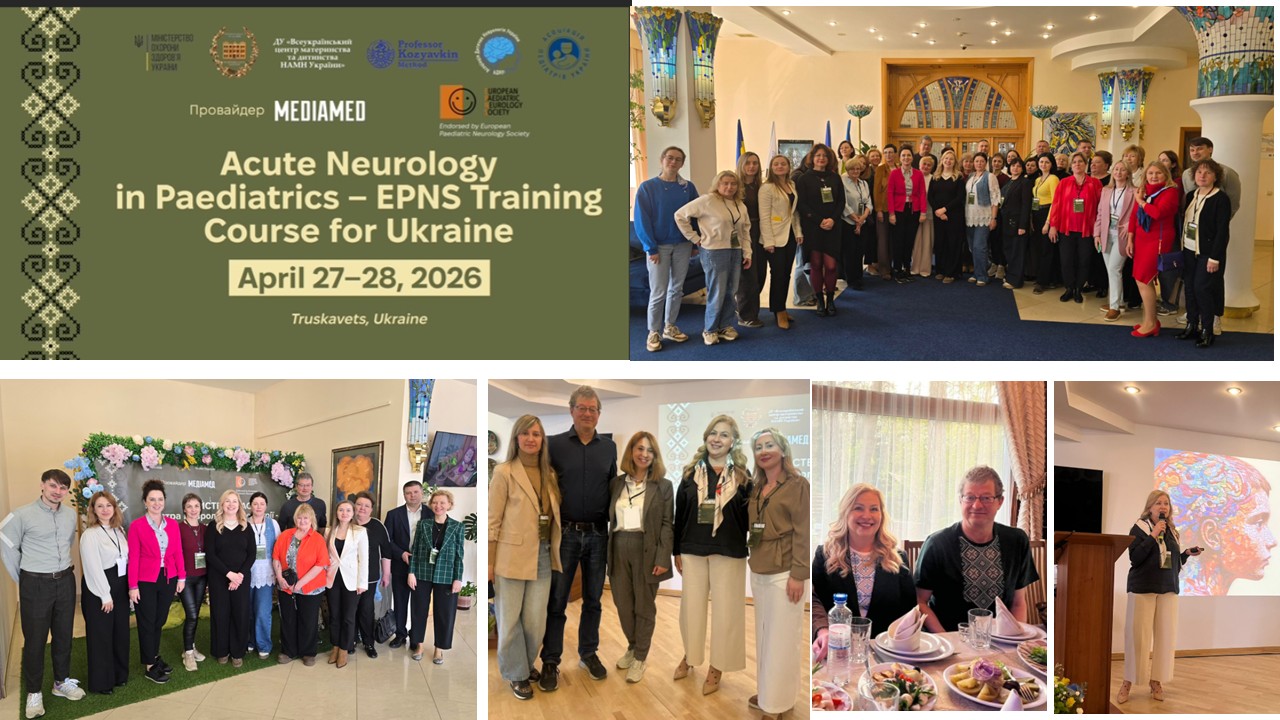
We are delighted to share the following two reports of the Masterclass “Acute Neurology in Paediatrics – a Training Course” organized by the Ukrainian National Society of Paediatric Neurology and supported by the European Paediatric Neurology Society (EPNS) using both the EPNS Visiting Teacher and EPNS Supporting Education schemes on 27-28 April 2026 in Truskavets, Ukraine.
REPORT WRITTEN BY PROFESSOR KEVIN ROSTASY
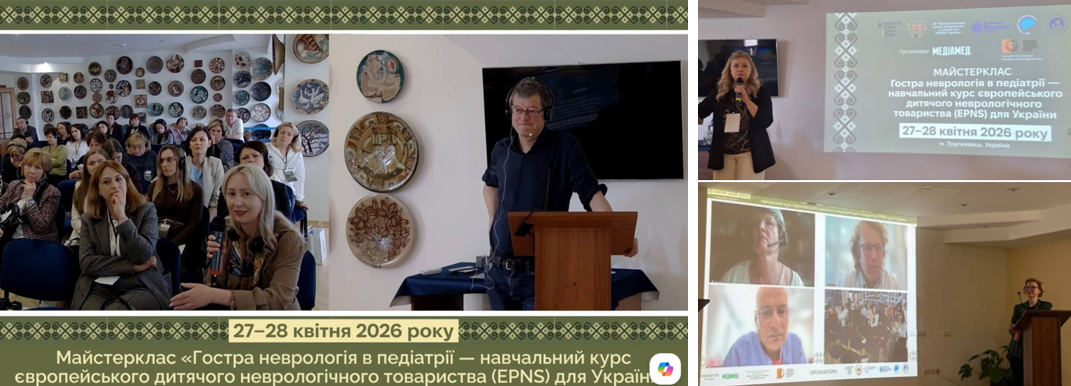
After a warm official welcome from different professionals of the Ukrainian health care system and the mayor of the city of Truskavets at the foothill of Carpathian Mountains, plus an introduction from the EPNS President (A. Jansen) the hybrid meeting started in the Kozyavkin International Rehabilitation Clinic.
The first day consisted of two overview lectures in the field of acute inflammatory disease of the CNS (K. Rostasy) and the management of stroke and it’s mimics (I. Kopyta), followed by an interactive case-based session in the afternoon. Participants foremost colleagues involved in the field of paediatric neurology came from various parts of Ukraine despite widespread daily arial assaults by Russia. They enthusiastically engaged with both speakers addressing a theoretical and practical questions and joined afterwards for an evening meal at a nearby restaurant in addition to dancing to Ukrainian songs.
The next day topics ranging from catastrophic onset/course of epilepsy (S. Zuberi), new epilepsy classification (D. Craiu) to acute ataxia (M. Steinlin) and the unconscious child (D. Bakker) were presented.
In summary this was an informative meeting which was very well organized by colleagues at the Ukrainian National Society of Paediatric Neurology contributing to the growth of the paediatric neurology community in a war- torn country. All participants expressed multiple times their gratitude for the ongoing support of the EPNS through it’s contributing members in person and online in these difficult times.
REPORT WRITTEN BY COLLEAGUES IN UKRAINE
On 27–28 April 2026, the EPNS-supported training course “Acute Neurology in Paediatrics” took place in Truskavets, Ukraine, bringing together Ukrainian paediatric neurologists and leading European experts in a hybrid educational format.
The course was organised by the European Paediatric Neurology Society (EPNS), Association of Child Neurologists of Ukraine, with the support of the International Rehabilitation Clinic of Prof. Kozyavkin.
Despite the challenges of wartime, the event successfully provided high-level medical education and strengthened international professional collaboration. The programme focused on key topics in acute paediatric neurology, including autoimmune encephalitis, demyelinating disorders, paediatric stroke, catastrophic epilepsies, acute ataxia, altered consciousness, and movement disorders.
The faculty included Prof. Kevin Rostásy and Prof. Ilona Anna Kopyta onsite, while Prof. Sameer Zuberi, Prof. Maja Steinlin, Dr. Dewi Bakker, and Prof. Dana Craiu joined online.
A major strength of the course was its interactive format, combining lectures with clinical case discussions and practical diagnostic approaches. The hybrid format enabled participation of physicians from different regions of Ukraine and promoted equal access to modern paediatric neurology education.
The course also highlighted the importance of continued cooperation between EPNS and the Ukrainian paediatric neurology community, supporting the development of paediatric neurology education and implementation of European standards of care in Ukraine.
On behalf of the Association of Paediatric Neurologists of Ukraine, we sincerely thank the European Society of Paediatric Neurologists for their support and contribution to the development of professional education in paediatric neurology in Ukraine.
EPNS Visiting Teacher Altynshash Jaxybayeva, Brigitte Volmer & Francis Cowan visited Kyrgyzstan in May 2026
REPORT WRITTEN BY Altynshash Jaxybayeva
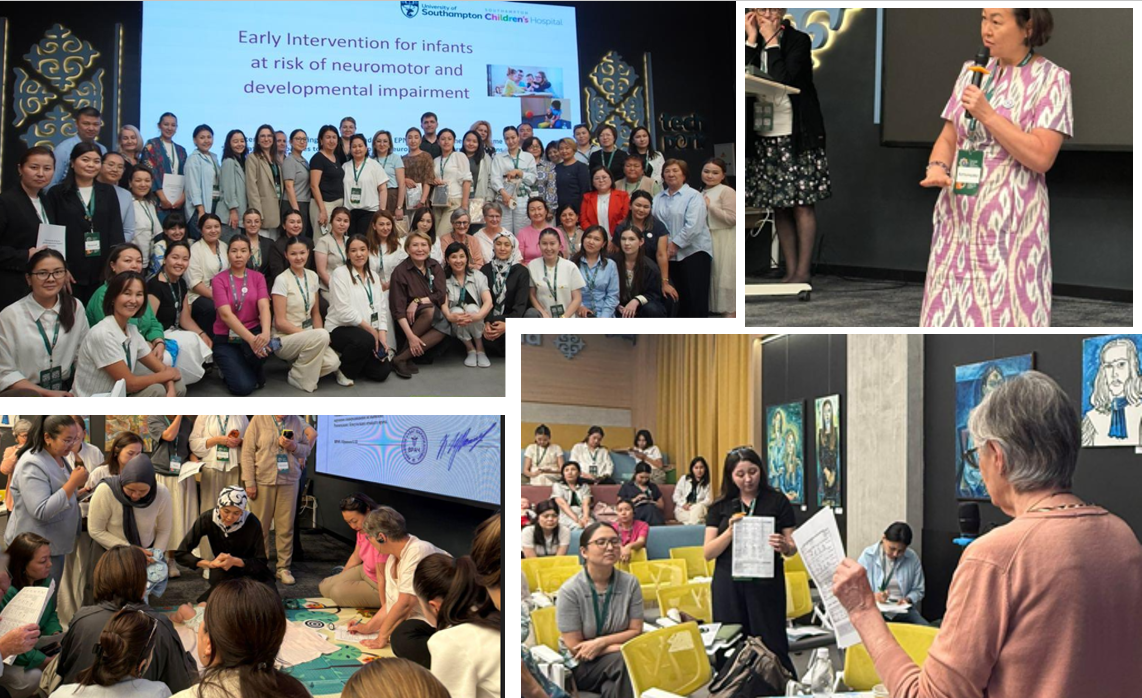
The EPNS Visiting The Teaching Course held in Bishkek, Kyrgyzstan, was a great success, attracting significant interest from across the region. More than 55 participants attended the course, including colleagues from Kyrgyzstan, Kazakhstan and Russia, creating a diverse and highly engaged learning environment.
The programme was exceptionally well organised, with a structured scientific agenda and a welcoming atmosphere that encouraged active participation and discussion. The venue provided excellent facilities, ensuring a comfortable and productive setting for both delegates and faculty.
The course was delivered by Professor Francis Cowan and Dr Brigitte Vollmer, whose expertise and engaging teaching style were highly appreciated by participants. Interactive sessions allowed attendees to ask questions, exchange experiences and deepen their understanding of key topics in paediatric neurology.
A special highlight was the continued enthusiasm for Professor Colin Kennedy’s book, Principles of Child Neurology in Infancy. Following a quiz competition, three copies of the book were awarded to the winning participants, generating considerable excitement among attendees.
The course provided an excellent opportunity to share knowledge, strengthen professional networks and support paediatric neurology education within the region. Feedback from participants and faculty was overwhelmingly positive, reflecting the value and impact of the EPNS Visiting Teacher Programme.
Further details, photographs and videos from the course will be provided in the full local report.
REPORT WRITTEN BY Asel Kadyrova, Chief Freelance Child Neurologist Ministry of Health of the Kyrgyz Republic & Chairperson Kyrgyz Association of Child Neurologists and Neurosurgeons
The course was conducted under the official Order of the Ministry of Health of the Kyrgyz Republic and therefore had national status. The event was supported by the Ministry of Health and brought together healthcare professionals from all regions of the country. Participants included child neurologists, neonatologists, paediatricians, rehabilitation specialists, university faculty members and medical residents working in both public and private healthcare institutions.
A total of approximately 75 participants attended the course, including representatives from national referral centres, regional hospitals, primary healthcare facilities, medical universities and postgraduate training institutions. We were also pleased to welcome colleagues from Kazakhstan and the Russian Federation.
The programme focused on the Hammersmith Neonatal Neurological Examination (HNNE), Hammersmith Infant Neurological Examination (HINE), early detection of cerebral palsy, assessment of infants at neurological risk and principles of early intervention. The combination of lectures, case discussions and hands-on practical sessions with infants provided participants with valuable knowledge and practical skills that can now be applied in clinical practice throughout the country.
The feedback from participants was exceptionally positive. Many attendees highlighted the practical nature of the training and the opportunity to learn directly from internationally recognised experts. The course also strengthened professional collaboration between specialists from different regions of Kyrgyzstan and promoted a common approach to early neurological assessment.
We are particularly grateful to Professor Frances Cowan, Professor Brigitte Vollmer and Professor Altynshash Jaxybayeva for their outstanding teaching, generosity and support throughout the course.
Importantly, the work initiated during this training is continuing. We are currently working on the translation and adaptation of the HINE guidance materials into Russian to facilitate wider implementation of the assessment tool in Kyrgyzstan and other Russian-speaking countries in the region. We hope that this will contribute to the sustainability of the project and further improve early identification of children at risk of neurodevelopmental disorders.
Thank you once again for the support provided through the EPNS Visiting Teacher Programme. This course has already had a significant impact on child neurology education in Kyrgyzstan, and we hope to continue our collaboration in the future.